Random Accomplishments

Changing Little By Little

Passage from 1855 Edition of Leaves of Grass

Passage from Roughing It by Mark Twain

Passage from Politics and the English Language

These three passages have an underlying concept of accomplishment. Leaves of Grass describes how America is an accomplished nation who has embodied many different manifestations which ultimately shaped the way the American life is. For example, the passage explains that America is a an entity or rather, a certain personality that can take place in “the new life of the new forms.” The passage then compliments all of the certain hardships that America has gone through and despite the fact that America is shaped by the same history, America is a “nation of nations.” This explains how America isn’t tied to a certain mold and through this we are able to “indicate heroes” who have accomplished a full life.

In Mark Twain’s Roughing It, Twain camps at Lake Tahoe where he feels a sense of fulfillment through nature. One of the most noticeable examples is how he camps on the lake side and wakes up feeling “thoroughly refreshed” making it this experience an experience that the readers want to have. He then states that being at camp can restore one self to “pristine vigor.” Twain follows up with an example of a man who actually came to the camp to take away their life but with some time experiencing life through the camp as he was “eating all he could” and “skeleton no longer.” With that, we can see how nature can put life back within people and to further themselves to enjoy life.

Politics and the English Language focuses on how you can change the way you write to accomplish a variety of goals with your rhetoric. For example, one needs to “let the meaning chose the word” in order to ensure that the words used will be elevated to the highest degree. The passage then states that one of the practices that should be definitely be avoided is to “surrender” to the word. Instead, they suggest that you should use words that “get one’s meaning as clear as one can” through this the certain image or message can be very clear without the need to have any unnecessary and elongated explanations. Therefore, keeping the simplicity of the word used allows people to accomplish the highest level of expression.

With all of these passages together, we can see how there are different methods to achieve a variety of goals, big or small. In Leaves of Grass, we see how an ideology is manifested within a nation who civilians live different and “heroic” lives. In Roughin It, we can see how nature can be a starting point to live an accomplished life. And finally, in Politics and the English Language we can see that we can achieve a better form of rhetoric if we use very simple words. As much of a reach that it is, I can see how I can apply these different methods to achieve these different goals. I am already an American, but interestingly enough, I don’t think that this Americanism is a reason to be heroic or live a heroic life. Either way, I already feel like I am a miniscule hero because of the revelation that there are some people who look up to me. Such as the freshman within the debate team who really thought that it was admirable that a person who just started debate is doing so well. As for nature, I don’t think I can really experience this reinvigoration because of the fact that I am so cooped up inside my house and school doing school work. But I can see myself possibly incorporating nature into my everyday life by maybe going to the park on the weekends. Lastly, I can incorporate certain simple sentence and simplistic words to enhance my writing and pray that I can get higher scores that way.

When it comes to accomplishing your goals, we can look at the demonstrations that these passages provide and incorporate them into our everyday our little acts.

Graffit City

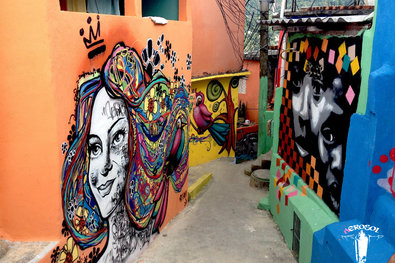
Walking down the streets of Newark, New Jersey, all I could see were images. The more I walk, the more I see, and the more I feel a sense of community. My sightlines were taken up by the colors, lines, and shapes that somehow deliver such beautiful messages. I couldn’t help but notice the children admiring the art from afar almost as if they are thinking, “That’s me up there.” Some buildings were covered in words like “desired” and “strength.” Other buildings had various forms of representation with silhouettes of women of color on the sides or education driven individuals. Some may argue that graffiti may be gang-related, vandalism, and explicit to some viewers. Even if it may be in some instances, I firmly believe that graffiti can be a measurement for a more conducive human study further proving that cities are the best places for study. Graffiti can represent a city’s urge to have a sense of belonging and it can show a community’s want to have change.

With the negative connotation that graffiti has gained, I understand why some people have issues with them on their walls and with that, conclude that it would hinder human interaction. However, this connotation comes from the false media and inaccurate representation in movies and in fact, does the exact opposite. Such movies relate gang activity to graffiti where gangs would spray on their logo, or emblem, on their proclaimed territory. But gang-related graffiti are very hidden and are not very common. In regards to explicitness, such as graphic depiction or curse words, they can be some of the ways people in cities express their frustration and utilize this negative spotlight, to actually create change.

Some of the more noticeable qualities of graffiti are the different types of expression that can be observed in cities. One of the most underrated forms is protesting. Many people relate protesting to marches, rallies, or stand-ups and don’t really consider graffiti as a form of protesting. People won’t be able to see such things in sparse regions. Contrary to belief, the city walls can be utilized as a political playground. Not only does it’s colors resemble that of a playground, but they hold the most “wild” of thoughts, expressing radical opinions to force it to the forefront of conversation. This form of protesting utilizes the negative connotation of graffiti and force the government and officials to see the problem at hand. I concede that city walls can also be areas for very negative and oppressive ideologies. But there are ways to counter this form of negativity. Graffiti can be used as political activism where artists can possibly cover up racists, fascist, and other symbols and have them resemble other objects. This type of cover-up forces our eyes to focus on the more positive aspects of life. For instance, in Berlin, Germany, many oppressive symbols, such as the Nazi swastika, are transformed by creative young teenagers into images of a house or a flamingo. With these small acts of change, cities show more inclusivity and show that they are aware of such offense.

When people think of graffiti, they don’t think about the rare. posh, well funded neighborhoods. Instead, they think about the old, compacted, run down apartments who hold the image of crime and poverty. Because of the lack of attention and assistance from the government, many people look to graffiti because it is, simply, all that they have. Graffiti is an alteration, a change that people enact willingly. With the ability to express one’s views and personality, civilians can alter the city into something that is “livable.” They change their surroundings into something that represents them. This can then allow others, specifically children, to look up to an icon and find someone that can relate to them, someone who experienced something that they’ve gone through and feel confident in where they are from. For instance, there is a microaggression that Black-Americans face on a day to day basis one being the lack of representation which can further affect the way people perceive themselves and their self-confidence. In Oakland, girls are learning how to do graffiti art to find confidence and counter the hyper male-dominated society by representing themselves.

In conclusion, cities are the best way to conduct human study and observe the way the residents interact with their community. We are able to see how, through art, residents socially interact with their community and continue their everyday lives. Though graffiti can also hinder interactions in the city, it can also be the method of seeing social processes in cities.

Graffiti For Change

Huffington Post: “https://www.huffingtonpost.com/entry/panmela-castro-graffiti-artist-brazil_us_563cf31be4b0307f2cad508f” by Taylor Pittman

Huffington Post: “https://www.huffingtonpost.co.uk/mary-mccarthy/street-art-as-a-tool-for-_b_15329722.html” by Mary McCarthy

NyTimes: “https://www.nytimes.com/roomfordebate/2014/07/11/when-does-graffiti-become-art/graffiti-is-a-public-good-even-as-it-challenges-the-law” by Lu Olivero

All of the articles have one thing in common: to inspire people to achieve one’s goals and solve problems through the art of graffiti. Taylor Pittman observes, Panmela Castro, a feminist graffiti artist in Brazil. She speaks out against the domestic violence against women by using the city as a focal point of communication. Painting with such vivid colors and striking lines, graffiti pushes people to see the artist’s message. With the city as her playground, she defies the sexist and male dominant society, addressing the problem by drawing murals of women all around her city. These murals serve as her expression of wanting to “change what it means to be a women in the world.” Through her graffiti art, she was able to create a “safe space” called Rede Nami, where women can utilize art to empower themselves. Rede Nami provides workshops for women who, in other circumstances, “would never talk about.” This platform inspires women to safely voice their experiences of domestic abuse and teach women that their art can make an impact.

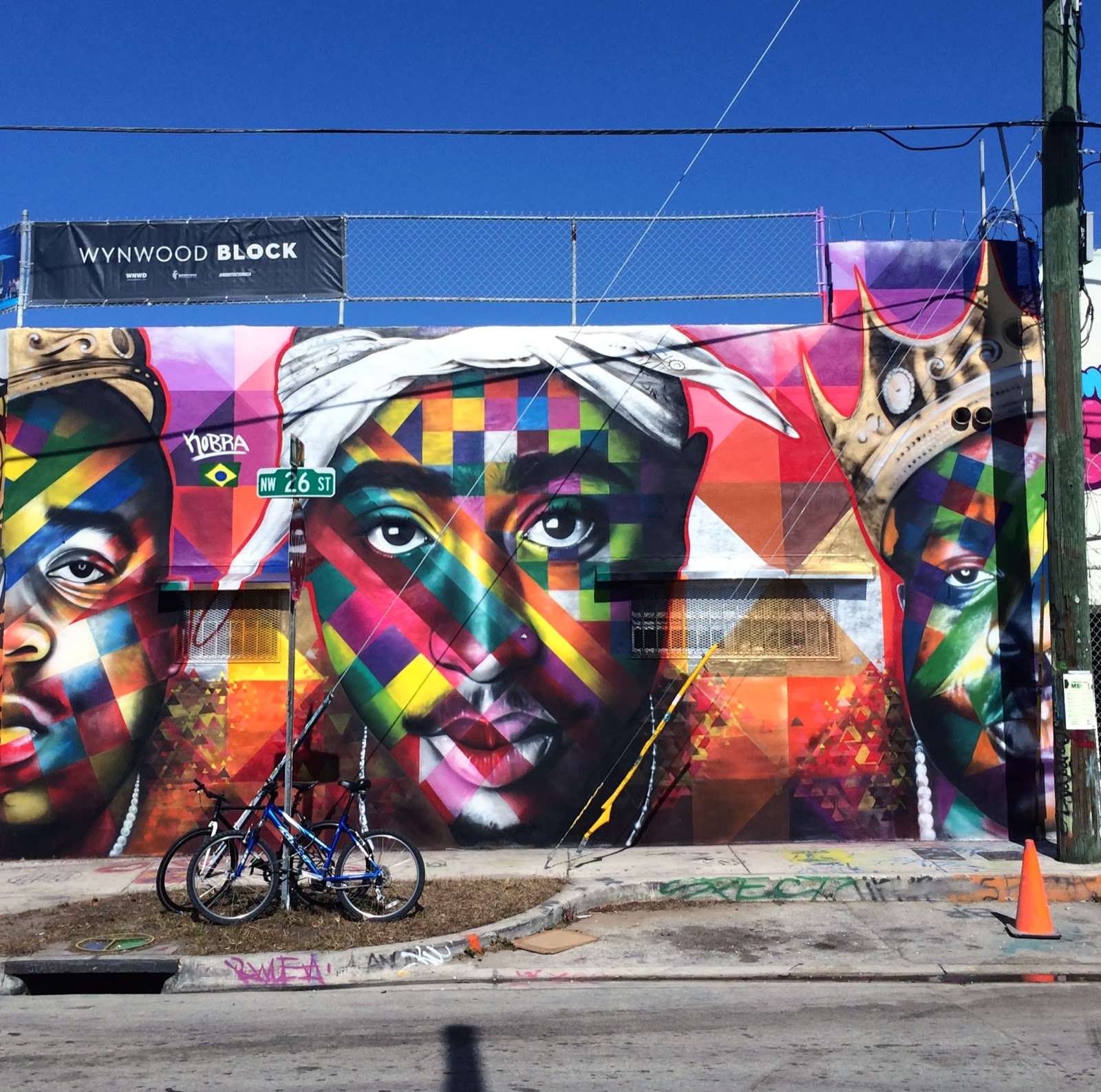
Mary McCarthy’s article gives us multiple examples of how graffiti has impacted areas around the globe. McCarthy speaks about how street art is used as a medium of “rebellion, and speaks of spiritual survival.” Graffiti is used in “poverty stricken” areas to have a sense of belonging, something that gives people a comfort zone. By using the streets people can “advocate and express personal, social, and political opinions.” One of the many example McCarthy gives takes place in Miami where the Goldman family used graffiti to transform one of the most dangerous areas of the city. This is an act of defying the stereotypes of graffiti, where graffiti is known to be as a sign of poverty and crime. With the embrace of street art, many programs sprang to get others into graffiti and is highly encouraged as a site of change and soon developed in other areas around the world. For example in Rio, an artist named JR installed his art in the “favelas” or the slums dramatically improving the mood of the area and gave them a sense of pride.

Lu Olivero begins with a form of irony where vandalism “is an expression” following it up with the the stance that it is “what makes it art.” He references Banksy, a British street artist who describes himself as “vandal” but became one of the most famous in the art industry. His works sparked a debate on whether or not graffiti is art or vandalism, raising the question as to why graffiti artist are looked to as “criminal” while artists themselves aren’t. On the topic of government issues, Olivero uses Brazil as an example where police officers often shoot graffiti artists. Olivero then sheds light on all of the positive that graffiti can do to communities. He states that graffiti artists have a goal of social development and “challenging the status quo.” Many graffiti artists create artistry jobs for those who live in low-income areas. They’ve also partnered with the local police officers to work within the legal boundaries of where they can express their art and hold festivals and events.

All in all, the usage of graffiti is used with the goal of solving problems within their city. Pittman’s article talk about how Panmela Castro’s goal is to use graffiti as a method of empowerment and to help others find their voice through art. McCarthy’s article is about how graffiti is a global medium to advocate for one’s opinions which can be a stepping stone to accomplishment. Olivero’s article informs us about how graffiti can be used within government boundaries and with the help of government officials, their can be instances of social development. As a whole, graffiti artists aim to change their community through inspiration, rebellion, and ironically, cooperation. Currently, I am incorporating these strategies within my life but in my own special way. I want to spark inspiration in those around me to make small instances of change, whether it be complimenting, standing up for someone, or simply, supporting those they care about. In some cases, these acts can be forms of rebellion. By supporting those you care about, you are also willing to teach one another from right and wrong, even if it means going against their opinion. You rebel against the superiority of the bully. You rebel against the toxicity of beauty standards and raise one another. It’s as if we can be a splatter of paint on each other’s canvas, coloring each other’s world one stroke at a time.

Not only are they getting the bread, but they are breaking bread as well. With unity and inspiration, the people residing in the communities were able to change the issues that they were facing.

Accomplishing Through Small Acts of Change

Ted Talk: “How Kids Can Help Design Cities” by Maria Mintzer
Ted Talk: “How to Revive a Neighborhood: with Imagination, Beauty, and Art” by Theaster Gates
Ted Talk: “You Don’t Have to be an Expert to Solve Big Problems” by Tapiwa Chiwewe

The main idea of the Ted Talks is to use problem solving skills and surrounding resources to make their cities better. Minzter utilizes the creativity and growing imagination of children to achieve a goal: to make their community siutable and inclusive for everyone. Children are more prone to be empathetic and thoughtful as they are described as an “indicator species.” On the contrary, usually city builders and architects forget to consider the voices of children despite the fact that these cities directly affect the children. Minzter and her team begin to initaite a plan to have children engage within the issues of the community. These children began to “combine their original ideas” that sprung from the inspiration of the issues that they thought were a problem. With these new ideas, several projects sprang such as the “Growing Up Boulder” where children redesigned a downtown park.

Gates uses a different method to impose change in his community. He ganers inspiration from his pottery ocupation and, like pottery, wanted to shape the world. He began to look outside of his studio, into his community, and noticed abandoned buildings. Gates bought the building and transformed it into the Archive House, which brought about the Dorchester Projects, a series of projects that were meant to tranform buildings into centers of gathering and vaious activities. These buildings were revived through “culture” and regrew cities as “people kind of reinvested” with their neighborhoods. With his neighborhood he inspired others to do the same. He gave advice to other states to rebuild and with all of these ideas combined, Gates began to shape the world.

Chiwewe went through different means to create change in his community. Chiwewe lived in South Africa and worked as a computer engineer and spotted a polution problen within is community but he didn’t know how to combat it. Instead he decided use what he knew, computer engineering, to solve this issue. He did his own research collaborated with other organizations and created a software and artificial intellegence to that could do recorded trends of the pollution. This showed that you can use your own unique perspecive to address issues “in your own way” and that you should explore the unconventional means to achieve a goal. “You may be pleasantly surprised.”

With these ideas of inspiration, imagination, and action combined you can accomplish any goal you put your mind to. Personally, I believe that all of these aspects are needed in order to create small instances of change. The more you can change the bigger you can impact your environment. I am currrently trying to change my school environment. I was inspired to make change after I learned the significance of how people’s action, like mircoaggressions, can affect a person’s psyche. One of the ways I can do this is by confronting people about problematic acts, more specifically, their rhetoric. This then pushed us to create a podcast that addresses the issues at my school, providing a variety of opinions on controversial topics. Creating change within your community doesn’t have to be material instead it can be through exchanging words and ideas.

Achieving your goals, step by step, can tranform your environment – thus, let’s get this bread!